Robinsons Land Corp. (RLC) is positioning itself as a stability-focused developer in Philippine real estate, anchoring its strategy on recurring income strength, disciplined capital allocation, and consistent execution across its portfolio, according to company disclosures and an exclusive interview with its leadership.
In its presentation, the company said its approach prioritizes predictable cash flows and conservative financial management rather than aggressive expansion, framing discipline and execution as core competitive advantages in a volatile market.
Anchoring its operational model is a recurring-income-heavy business mix, which accounted for 73 percent of consolidated revenues and more than 80 percent of EBITDA in 2025, driven by malls, offices, hotels, logistics assets, and RL Commercial REIT, Inc. (RCR).
RL Commercial REIT contributed 41 percent of consolidated net income attributable to the parent in 2025, underscoring the scale and stability of its income-generating portfolio.
The structure supports shareholder returns, including a P0.75 per share dividend in 2025, representing a 27 percent payout ratio, with guidance of P1.00 per share in 2026.
The company reported a net debt-to-equity ratio of 16.17 percent in 2025, which it said remains well below industry norms and provides flexibility to manage volatility and allocate capital selectively.
Capital expenditure reached P18.87 billion in 2025, directed toward malls, offices, hotels, and logistics assets with strong demand fundamentals, while residential development is paced according to market conditions.
RLC also cited its capital recycling strategy through RL Commercial REIT, Inc., which raised P13.96 billion via oversubscribed block placements, allowing it to unlock capital while maintaining portfolio strength.
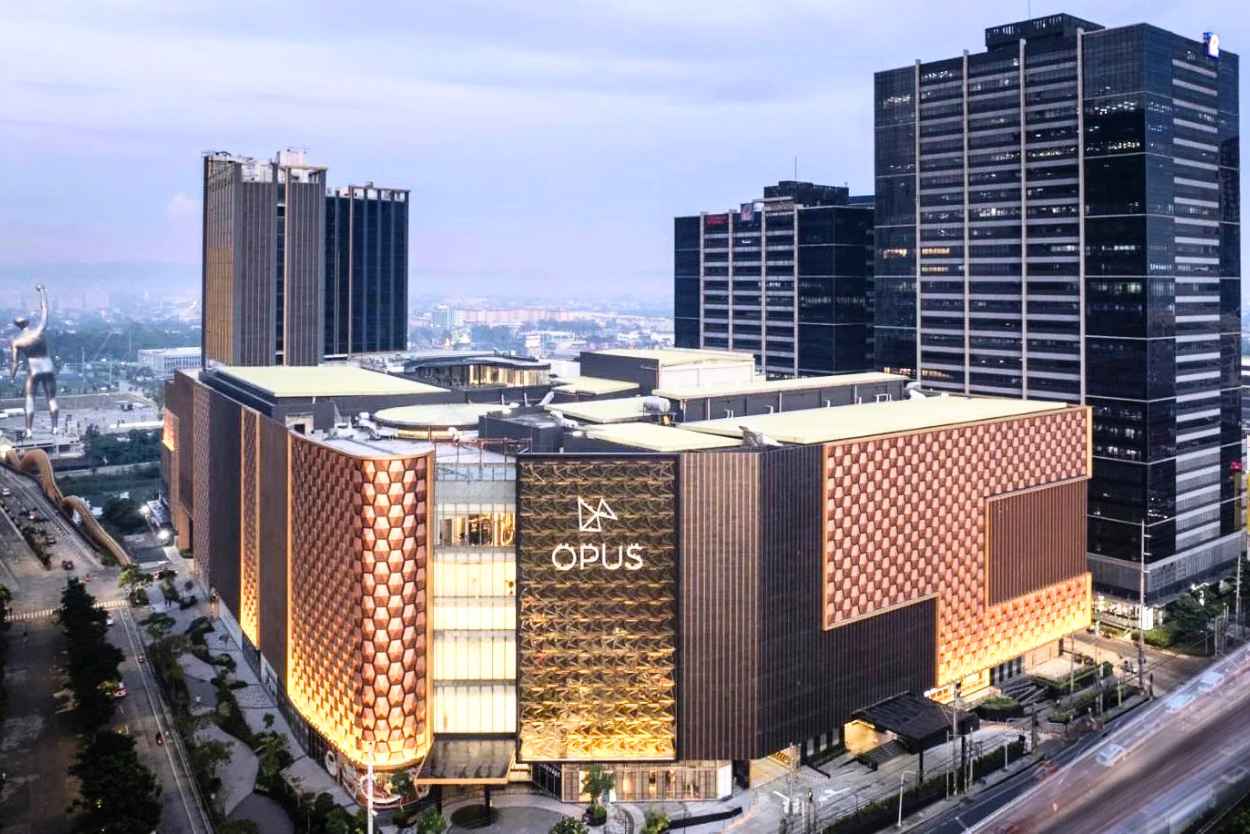
Execution across the portfolio reinforces this strategy through demand-led expansion and operational discipline. New retail developments such as Robinsons Pagadian, which reached 98 percent occupancy, and The Plaza Bagong Silang, which achieved full occupancy at 100 percent, reflect disciplined site selection and strong end-user demand. In offices, continued BPO demand, stable weighted average lease expiries (WALE), and the expansion of work.able underscore operational resilience. These execution standards extend across logistics, hotels, and estate developments, where utilization quality and long-term tenant stability are prioritized over speculative expansion.
In an exclusive Bilyonaryo.com interview, RLC President and Chief Executive Officer Mybelle Aragon-GoBio said discipline is embedded directly into investment decision-making through strict financial thresholds, explaining that “discipline is visible in the rigorous hurdle rates applied to every project.”
She added that governance approval is preceded by internal discipline at the business unit level, noting that “while the Investment Committee and the Board have final say, the ‘no’ often begins at the business unit level during the underwriting phase.”
Aragon-GoBio said investment decisions are anchored on strict return requirements, explaining that “we look at a spread over the Weighted Average Cost of Capital (WACC). If a project cannot hit our internal rate of return (IRR) thresholds or if the payback period exceeds our risk appetite for that specific segment, it does not move to the Board.”
She said the company applies a centralized capital allocation framework to ensure consistent, risk-adjusted evaluation across all asset classes, adding that “we use a centralized capital allocation framework. This ensures that a logistics warehouse and a luxury hotel are evaluated through the same lens of risk-adjusted returns.”
She noted that capital allocation is actively adjusted across cycles, saying that “if a specific market faces a supply overhang, capital is redirected toward other segments where we see higher immediate yields,” preventing “segment loyalty from overriding financial logic.”
Aragon-GoBio explained that RLC utilizes standardized metrics across all units to level the playing field, allocating capital strictly to projects generating the highest economic value added (EVA) relative to their risk profiles.
Aragon-GoBio said residential development is managed using internal demand signals, including inventory turnover ratios and take-up rates, explaining that “if we see a buildup of unsold completed inventory or a cooling in reservation sales, we pause new launches to manage capital commitments and protect our margins.”
She added that recurring-income assets remain the stabilizing core of the portfolio, saying “we prioritize recurring-income assets like malls and offices because they provide cash flow stability through residential cycles.”
She also described capital recycling as a defining structural strategy, stating that “REIT execution is now core to our identity. It is a strategy of ‘perpetual capital.’”
She explained that this approach shifts the company’s business model, saying that by folding mature income-generating assets into RCR, RLC unlocks balance sheet value to fund new developments, evolving from a traditional “build and hold” developer into a “build, stabilize, and recycle” institutional platform.
The company said its 73 percent recurring-income mix is a deliberate portfolio target designed to support long-term resilience, with Aragon-GoBio noting that “we aim for a dominant recurring-income base because it provides the resilience needed to support our investment-grade profile.”
She added that portfolio allocation is actively managed for stability, saying “We remain opportunistic in residential markets. However, we actively tilt our portfolio toward investment properties to ensure that our dividend-paying capacity and interest coverage remain strong regardless of market volatility.”
RLC said execution is measured not only by occupancy but by tenant durability and lease quality, tracking weighted average lease expiry (WALE) and tenant retention rates.
As Aragon-GoBio explained, “if occupancy was driven by short-term incentives or deep discounts, retention would drop at renewal,” adding that the company prioritizes tenant mix quality over rapid leasing. This has allowed RLC to outperform the market average occupancy rate.
She added that stability is embedded at the project level through location strategy and tenant composition, including the integration of essential services such as supermarkets and pharmacies to ensure consistent foot traffic.
Aragon-GoBio said financial resilience is reinforced through conservative leverage, liquidity buffers, and internal cash generation, noting that “we prioritize generating robust operating cash flow to self-fund our capital expenditures,” while maintaining substantial undrawn credit lines to preserve agility.
She added that the company rigorously stress tests its financial position, saying “we run scenario models under a sustained high-rate environment to validate resilience.”
She said internal incentives reinforce disciplined execution, emphasizing that “we reward execution excellence and capital efficiency over simple top-line growth,” with performance anchored on delivering projects on time, within budget, and with high collection efficiency.
She also said capital allocation discipline is enforced through performance metrics tied to Return on Invested Capital (ROIC), ensuring business units are held accountable for capital efficiency.
RLC said its diversified portfolio, conservative leverage, recurring income base, and execution record position it as a reference point for stability in Philippine real estate. For investors, the company said its model illustrates how disciplined capital allocation, structured decision thresholds, and consistent execution can sustain performance across market cycles.